Plenary Speakers
October 18 09:00-10:00

Transgenerational and early life consequences of adverse exposures: they do not grow out of it
Andrew Bush
UK
My research interests include the invasive and non-invasive measurement of airway inflammation in children, in particular the use of endobronchial biopsy in the management of severe asthma, and clinical physiology, especially respiratory mass spectrometry. I have supervised more than 50 MD and PhD degrees, co-authored more than 800 papers in peer review journals, and written more than 130 chapters in books and monographs. I am Deputy Editor of the American Journal of Respiratory and Critical Care Medicine. I have served as Guidelines Director of the European Respiratory Society and chair of the Publications Committee. I am also an emeritus NIHR Senior Investigator. Major recent awards include the British Thoracic Society medal (2022, the first Paediatrician to be so honoured), the 2024 James Spence Medal and an Honorary Life Fellowship, the highest honour of the RCPCH, and the 2024 ERS Presidential award. Most importantly, I have the eight greatest grandchildren in the world, Dylan and Jack in South Africa, Oscar and his twin siblings Aya and Fletcher, Lydia, Dominic and Ilyas, all in London.[/modal_popup_box]
October 19 09:00-10:00
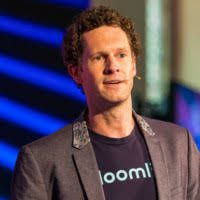
How AI will revolutionize perinatal care
Julien Penders
USA
Julien has (co-)authored over 60 papers and 20 patents, is a TEDx speaker and an EMBS Distinguished Speaker. He serves on the IEEE Technical Committee on Biomedical Health Informatics and sits on the Program Committees for several international conferences. Julien was a 2004/2005 fellow of the Belgian American Educational Foundation. He holds a M.Sc. degree in Engineering Physics from University of Liege, Belgium (2004), and a M.Sc. degree in Biomedical Engineering from Boston University, MA (2006).
[/modal_popup_box]
October 20 09:00-10:00
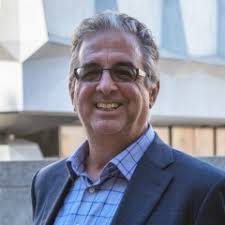
Digital addiction: the other 21st century epidemic
Dimitri Christakis
USA
Dr. Christakis is a pediatrician at Seattle Children’s Hospital in Seattle and a professor in the School of Medicine at University of Washington. He has devoted his career to investigating how early experiences impact children and to helping parents improve their children’s early learning environments. He and his colleagues in the Christakis Lab have made a number of landmark findings, including discovering that young children who watch TV are more likely to develop attention problems and other health and behavioral issues.[/modal_popup_box]
